




The Collaborating Centre for Oxford University and CUHK for Disaster and Medical Humanitarian Response (CCOUC) participated in the 2026 Beijing Science Dialogue, held under the theme “Science in a Complex World – Science for a Better Future”. The international gathering opened in Beijing, bringing together more than 1,000 scientists, researchers and representatives from around the world to promote scientific exchange and international collaboration.
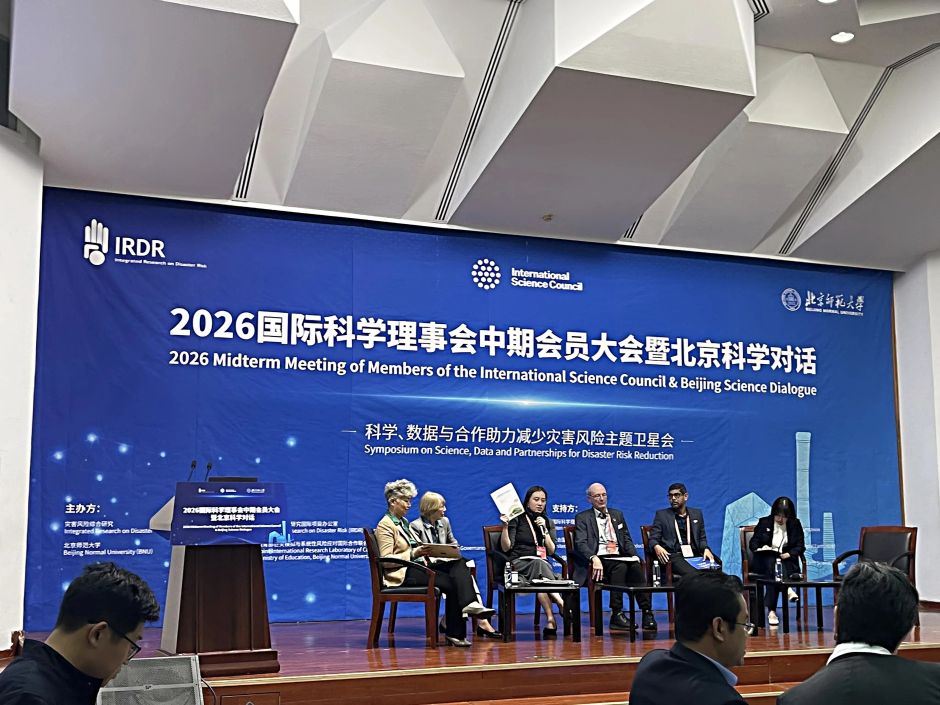
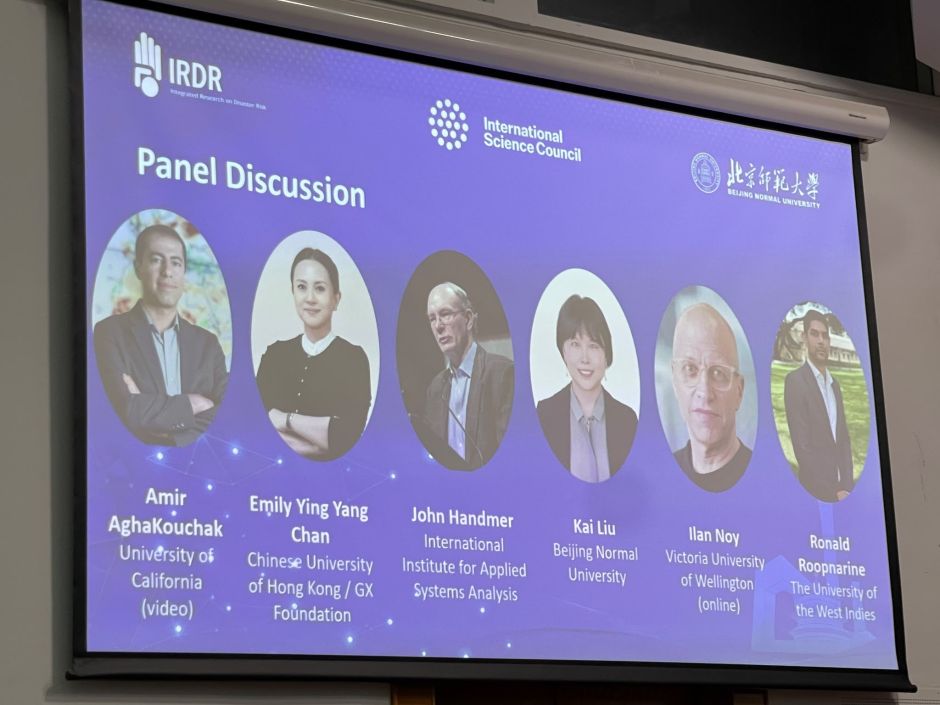
Professor Emily Ying-yang Chan, Director of CCOUC and Kuok Group Professor in Global Public Health and Humanitarian Medicine at The Chinese University of Hong Kong (CUHK), joined the satellite symposium “Science, Data and Partnerships for Disaster Risk Reduction”, organised by the Integrated Research on Disaster Risk (IRDR) programme at Beijing Normal University on 20 October 2026. She participated in Panel IV, “Systemic, Compound and Cascading Risks”, alongside international experts in disaster risk research and management.
The panel examined the challenges of understanding and managing interconnected disaster risks, particularly those arising from complex interactions between natural hazards, critical infrastructure and human systems. Discussions addressed the limitations of conventional risk assessments, the potential applications of artificial intelligence and complex systems modelling, multi-hazard risk assessment, and the importance of vulnerability mapping and cross-sector coordination. These exchanges highlighted the need to better translate scientific knowledge into practical strategies for managing systemic and cascading risks.
During the Beijing meetings, Professor Chan also shared insights from the special report “Managing Dengue Risk Along the Laos-China Railway: An HEDRM Approach”, published in 2026 through collaboration involving CCOUC, the Centre for Global Health (CGH), IRDR and humanitarian partners. The report examines dengue prevention and control measures along a major cross-border transportation corridor through the Health Emergency and Disaster Risk Management (HEDRM) framework, illustrating the importance of integrating public health protection into infrastructure operations and cross-border disaster risk management.
CCOUC's participation provided an opportunity to exchange perspectives with international scholars on systemic disaster risks, public health resilience and science-based risk management. As an IRDR International Centre of Excellence since 2016, CCOUC continues to promote interdisciplinary research and international collaboration to strengthen health emergency preparedness and disaster resilience.
 CCOUC hosts the CCOUC International Centre of Excellence (ICoE-CCOUC) endorsed by Integrated Research on Disaster Risk (IRDR)
Copyright © 2026. All Rights Reserved. CCOUC and Emily Ying Yang CHAN
Driven by  Newt
Freedom of Information | Privacy Policy | Copyright | Accessibility | Nuffield Department of Clinical Medicine | Medical Sciences Division | Oxford University
Home | Site Map | Contact